Saturday, October 18, 2014
And The Mountains Echoed, by Khaled Hosseini
Friday, April 19, 2013
The Oath Of The Vayuputra by Amish Tripathi
Thursday, April 18, 2013
Litigators by John Grisham
Monday, November 21, 2011
Sons of Fortune by Jeffery Arcxher

Hi Friends
I read this book by Jeffery Archer recently.
Throughout the book, I got the feeling of Deja Vu, reminding the story style of ‘Kane & Abel’, ‘First Among Equals’, ‘Only Time Will Tell’.......
I think, Jeffery has written the blocks of instances in his notebook, which when required will be injected in new book, with minor tweaking of names and locations. And I am sure, had he been an MBA, he would have used Microsoft Excel for the same J
Coming to the main story, as always, the master story teller keeps you on edge of the seat. But, the climax couldn’t keep the pace with the built up crescendo. In fact, the most awaited moment of the two main characters meeting with the facts revealed, is treated in very shabby manner.
So, if you haven’t read Jeffery Archer’s other books, I will recommend this book, but if you have, then don’t pick it with many expectations.
Monday, October 24, 2011
Only Time Will Tell by Jeffrey Archer

The Secrets of the Nagas by Amish Tripathi

Saturday, September 10, 2011
The Immortals of Meluha by Amish Tripathi

Thursday, December 16, 2010
The Immortals of Meluha: A Review

Aah! Just finished with just another book by just another IIM graduate. But the story this time was not just another story that we listen to or read every other day. This story was of none other than that of Lord Shiva who has been portrayed as not the God but a superhuman who earned that status of Lord Shiva through his righteous fight against the evil.
The story is of Shiva, the tribal leader of a Tibetan tribe who’s invited by Nandi to his kingdom of Meluha in the lands of Sapt Sindhu. The people of this land are blessed young-forever because of the treasure called somras that they drink. This civilization is an extremely advanced one where everything seems to be perfect and everyone seems to be rational. They have the most advanced scientific tools at disposal with most intelligent people to develop them further. Everything seems to be fine with them, except one thing. They are Suryavanshis – descendants of Lord Surya and followers of Lord Ram – and they are faced by continuous attacks from their ‘enemies’ – Chandravanshis, descendants of Lord Chandra. This is where the story begins, but it ends with the defeat of Chandravanshis by the Suryavanshis under the guidance of Lord Shiva. To know how and why, you have to read the novel.
The story has been greatly put together. The research has been fantastic. It doesn’t look like the debutant novel by Amish, I thought he’s written atleast half a dozen novels before penning this down. If you are interested in mythology and fiction, this is the best book that you can read where mythology meets fiction and creates a great story. I’m waiting for the next two novels in the Shiva trilogy by Amish.
-Arun Sharma
(Originally published at www.whynothavefun.wordpress.com by Arun Sharma)
Monday, October 4, 2010
The Lost Symbol: A Review

I know it’s been quite a while since the book was out, but I read it just now and thought it’ll be great to give you guys a head start on it, in case you plan to read it.
If I rate Dan Brown’s other fictions, namely The Da Vinci Code and Angels & Demons at 5, I’ll rate The Lost Symbol at 4, or maybe even 3.5 due to some reasons. The Lost Symbol is another Robert Langdon stunner with the usual Dan Brown beginning that he wakes up in the morning not knowing where he’s going to end up in the evening. This plot has been followed in all his novels without exception. And I think Dan Brown is obsessed with three things - Europe, America and Christianity.
The plot of the story rotates about a mad man trying to find a Masonic Pyramid which is believed to be hiding the secret of some secret Word that leads to apotheosis of the man. And obviously, there’s only one man on earth who can find and decipher this pyramid and this word – Dr Robert Langdon. And out of nowhere, he finds himself trying to save his mentor and his own life from this madman who’s also being followed by none other than the CIA chief. The end, of course, you’ll have to find it yourself.
Though the story is intriguing and the thought process has been great, but I think Dan Brown is getting caught into his own web. During most of the novel, it looks like he has written it just to show-off his intellect and knowledge. He has gone into so detail about the specification of events, even the ones that don’t have any impact on the story, that it starts getting boring and sometimes irritating. The description of Italian marble and 16th century bible etc etc were some parts which were not at all required, but were there in the story. Such parts were enough to distract the attention away from the main plot.
Apart from this, I think the novel has been written very well and is a usual Dan Brown thriller with unexpected turns and twists. Though I’ve rated it below his other masterpieces, it’s definitely way above some of the other well-known authors.
Arun Sharma
(Originally published @ www.whynothavefun.wordpress.com by Arun Sharma)
Friday, March 19, 2010
The Lost Symbol by Dan Brown

Saturday, March 13, 2010
Rising Sun by Michael Crichton
This is the fourth novel by Michael Crichton, which I read.Tuesday, November 10, 2009
2 States - The story of my marriage: Chetan Bhagat

Sometimes, I think Chetan Bhagat is writing specially for the generation that I belong to. His debut novel “Five Point Someone” came at a time when I was in the last leg of my engineering and that too in Mechanical Engineering. So, the novel was and still is very close to my heart. Then came “One Night @ Call Center” and “Three Mistakes of My Life” that were again very precisely timed to match the movements in my life. And now, when I’m pursuing my MBA, Chetan has come up with this new novel “2 States” about an IIMA passout who finds his love for life during MBA.
The story of the novel spins around the lives of a Punjabi boy Krish Malhotra and a Tamil girl Ananya Swaminathan. As was written in their Nakshatram, they met over the dining table in IIM-A and fell into love with each other, just because the Punjabi honcho couldn’t stay “just friends” any more. Subsequently, they had made to each other’s beds pretty fast and often during the course of the MBA. But again, as the legend has it, their parents had to disagree with this decision of their children. The refusal was partly due to North India – South India clash and partly due to the generational egos of parents when children select life partners for themselves. And then, it takes the Citibank Relationship Manager, Mr Malhotra and HLL Marketing Manager, Ms Swaminathan, quite a while to bring the two families together.
Chetan has spun the novel nicely around this story and maintained the seriousness of the North India-South India issue along with the fun of reading his novel. The description of intimacies by Chetan Bhagat has been as unmatched as ever before. And some anecdotes like “we don’t use spoons to measure alcohol” made me laugh at the conversation between a Punjabi boyfriend and his prospective Tamilian father-in-law. The description of Punjabi lifestyle and their way of looking at the Tamilians and vice-versa has been interestingly funny. Just like his previous novels, this one is also full of youth and unrealistic idealism at certain points, but that fits in perfectly well. Some twists here and there make it an irresistible read.
On a serious note, there’s one particular incident that left an impression on my mind from the novel. There is a conversation between Krish and a Guruji in Pondicherry’s Aurobindo Asharam where Guruji guides him that forgiving someone doesn’t make him/her right. All it does is to make the forgiver feel lighter and happier.
All-in-all, I found 2 States an interesting novel, worth spending some time to get yourself relaxed.Arun Sharma
Monday, August 24, 2009
Book Review: Of Course I Love You..!

Durjoy Dutta and Maanvi Ahuja have nicely presented the tale of the college life of a guy Deb who is an average performer in every field except getting girls to bed. The novel is all about the college life of a loser who doesn’t get to see good grades in his college life but still believes he was an IIT stuff, just dropped in DCE. The story has some characters like Vernita, Tanmay, Deb, Shrey and Avantika who made me feel a left-out from the world and doubt my physical (read sexual) prowess given the fact that I’m 25 year old virgin. Vernita is the only girl in Mechanical Engineering department and hence, pretty obviously scores good marks every time. Tanmay is Vernita’s boyfriend who’s hated by Deb and Shrey because he’s rich, handsome and intelligent. Deb is an average performing guy in studies but scores high on girlfriends and night outs. Shrey is this dream-guy who doesn’t give a shit to the studies and exams and still makes it to a start-up company in Germany. Avantika is the goddess, the most beautiful girl on the earth, the most gorgeous and the sexiest one too. She knows what to do, when to do and how to do, I hope you got it. After struggling hard in the college, when Deb doesn’t get placed in any company, he hooks up in BHEL and finds Amit, his to-be-best friend. He enjoys his life by shaping up a love life for Ami and Astha and hence getting all the office work done by Amit, the studious small-town boy.
The story ends in such a passionate love-making by Deb that I envied him for the same. It’s a nice book, Five Point Someone class. It’s a story about the youth, but it can be frustrating at times, especially when you do not have a girlfriend of your own.
Arun Sharma
Sunday, December 7, 2008
Wheels by Arthur Hailey
This is the second novel of Hailey, which I read.It was a logical choice for me, as I belong to Automobile Industry. The style of Hailey was as usual, too detailed.
Giving the feeling of how Automobile Industry works in Detroit, and especially by Big Three i.e. GM, Ford and Chrysler.
It gave the visual work details of the Assembly Line, then how the whole process of starting new car to selling it.
It also touched the lifestyle of Detroit, of automotive guys, and then the Black population in Detroit.
Overall, it was a decent read, with a slow story, and without any message for readers. I will say, read it only if you are interested in Automobile Industry.
Wednesday, November 26, 2008
The Money Changers by Arthur Hailey
This is the first novel by Arthur Hailey, which I read. Before it, I tried to read, Overload, Airport and Detective, but was not able to proceed more than 50 first pages.I picked this novel, understanding that Arthur Hailey is research oriented author, who gives full ins and outs of the sector, about which it is writing a novel.
So, in the given picture of Global Economic Tsunami, ‘The Money Changers’ by him was the logical choice.
The story is thrilling, giving all the details of Banking industry. And it gave me better picture about how US is pushing its valueless Dollars, projecting it equivalent to gold, in the whole world. Also, it gave me insight what might have happened to Lehman Brothers, Merryl Lynch, J P Morgan Chase, Bank of America…………………
I think if you seek enjoyment in reading and you are interested in Financial Sector, specifically the Banking Sector, it’s the best time to read this
Saturday, March 8, 2008
TO WHERE IS THE INDIAN IT INDUSTRY HEADING?

250 pages
Fiction
Spanning from January 2005 to December 2008 and set in the continents of Asia, America, Africa and Europe, Release 2.0 is an interesting science fiction novel and thriller concerning the Indian IT industry. This futuristic novel explores two possible outcomes of the Indian IT industry- both utopian and dystopian. From another perspective, it also chronicles the rise of the IT industry in India and its expected future.
The current contribution of the Indian IT industry sadly mostly pertains to the services sector. The ultimate contribution of the IT industry to India as a nation is almost nothing apart from the minor revenue earned. IT work is outsourced to India because of the cheap labour the country provides. India however faces competition from Hungary, Iceland, Morocco, South Africa, Australia and New Zealand as far as outsourcing is concerned.
Release 2.0 prophesises that if India’s IT industry relies heavily on services not only will it stagnate but bears a risk of actually being wiped out. The author has drawn a wonderful parallel with the mills in Mumbai that relied on cheap labour. In the 1850s India had a booming export business of yarn. The Japanese mills however improved in productivity by investing in new technology. Soon the Japanese mills superseded the Indian mills and took away the Chinese market. The author paints a grim image of the carcasses of the defunct textile mills in central Mumbai waiting to be sold for their land value. IT firms will face the same consequences if they don’t innovate. This is the dystopian outcome of the Indian IT industry.
A major part of Release 2.0 is set on the tiny isle of Mauritius. Mauritius, which is known as a tourist and leisure destination actually houses a backup centre for the software development centres in mainland India. It stacks seventeen and a half tonnes of back up batteries and its diesel generators has four thousand gallons of fuel to provide fifteen days of power supply in case of power failure India. A mysterious figure called Mr.Mauritius heads the operations out there. His real identity is kept under wraps and is only revealed at the end of the novel.
A special feature of Release 2.0 is that it is very grand in its technological vision. The author goes into intricate detail to lucidly describe these new innovative technologies.
Release 2.0 suggests that the Indian IT industry should follow the steps analyzing, designing, building and testing to innovate. The characters of the novel create a computerized hair cutting machine which creates a data base of every strand of hair. An electronic pair of scissors clips hair. An identical scalp is created bearing the desired haircut which was replicated on the human scalp. The customer is given the privilege to review the progress of the haircut by checking out its image display on the computer screen. This technology is furthered into the collection of data from across the world through wireless means using secure data-channels which itself is the most beautiful ramification of a seemingly simplistic technology. A concept as easy as putting ‘individual’ tags has been given an entirely new dimension in the wireless future.
The characters use RFID technology (radio frequency identification by electromagnetic and electrostatic coupling) to precisely identify any object or person any where in the world. This system bears a striking similarity to the futuristic technological system of global tracking shown in critically acclaimed motion picture Minority Report.
The inflowing information is stored in a mammoth data base. A brick wall astonishingly lights up to form a gigantic plasma screen. After all to exhibit mammoth data a screen which is the size of a wall is needed.
A normal ball point pen turns out to be a digital pen. It’s activated by removing the cap. It’s deactivated by replacing the cap. The pen has an inbuilt modem which is the size of a hairpin. The pen has an invisible digital camera. Its optical sensor captures any work done with the pen and duly registers the pen’s movements. A processor digitalizes the words and images. The data thus collected is then transferred to the ‘wall’ through the hairpin modem thus enabling the building of a huge database at the backend.
The book suggests an amazing networking strategy to help in the innovation. Like minded people are who want to want to see India’s IT industry innovatively flourishing are encouraged to be a member of the South Asians’ Network for Research and Development. The members may actively participate in the research or help by financing the projects. They must be well-coordinated like the Al Qaeda not in promoting terrorism but in evolving a sophisticated and secure system for information dissemination. Though the members of this network are not directly connected to the head person the IT related information that they send are reaching the headquarters. The back-end data may be available to the front end whenever required simultaneously maintaining top secrecy. This is only possible by the way of an emerging telecom provider. Banks and the President of India are also involved in the networking.
Beauty contests are eyed for choosing beautiful woman who has in depth IT knowledge. It is a refreshing change to see IT companies sponsoring a beauty pageant instead of cosmetic companies. Instead of asking clichéd questions on world peace, IT related questions are asked.
Release 2.0 suggests that new overseas markets like France need to be tapped by the Indian IT industry. If through innovation India seems to be a lucrative IT hub, the brain drain trend may be reversed. Indeed eminent IT personalities may be motivated to pack their bags and return to their mother land India.
The utopian future that the book envisages is IT people making a beeline for Bangalore, leading Indian IT companies merging thereby forming one of the world’s largest company, villages being digitalized and the IT industry providing a major share of the GDP. The key to India being an IT powerhouse according to the book is through innovation and meticulous networking.
Besides its visionary ideology, the book stands out for the way it has chronicled and caricatured some of the chief architects of the IT industry.
Though this book is set in the IT industry it is not meant for just IT professionals. Any person who enjoys thrillers should find it an enjoyable read.
Friday, March 7, 2008
The Prayer by Al Raines
This novel by Al Raines comes with the label ‘the first ever horror novel from India’ on its cover. Authors of the cult supernatural novel November Rain unfold yet another spine chilling tale through “The Prayer”.
The novel is set in Riverdale - a town otherwise well known in Archie’s comics. However Al Raines’ Riverdale is not at all a mirthful town as it is haunted by an evil prayer. Prayers are meant to give hope and heal. Unfortunately a prayer bearing a Wiccan curse is being forwarded to the inboxes of the citizens of Riverdale. This sinister prayer comes with the pledge that if read before bedtime it’ll make the reader’s dreams come true. By ‘dreams’ the prayer doesn’t refer to ‘wishes’ but ‘what the person dreams of when asleep’. Not all dreams are sweet, nightmares plague one’s consciousness when in slumber and some of those nightmares may indeed be of death. Reminiscent of the film The Ring in which every person who sees an evil video is supposed to die, in The Prayer, whoever has a nightmare of death after reading the prayer loses a loved one or dies. Life soon becomes a living nightmare with the characters in the book desperately trying to stay awake over cups of coffee to prevent themselves from falling asleep and dreaming in the process. Weariness however catches up and before they know it the characters are asleep and having ominous nightmares which will soon turn to reality once they wake up.
Eight-year-old Jamie found this prayer on a parchment on the windshield of his family’s car. He read that if he sent this prayer to seven people his dreams would come true. He diligently forwarded it with the hope that his separated parents reconciled. The characters affected by this forwarded prayer are shown to be within six degrees of separation.
The author does claim to be inspired by evolutionary biologist Richard Dawkin’s theory of memetics. Meme is Dawkin’s unit of human cultural evolution analogous to the gene. The Prayer file not only infests the computers of the recipients like a virus, annoyingly popping up on screen just refusing to be deleted but adhering to the principles of memetics it seems to mutate in the brains of the recipients to be ready to jump to new vehicles. Adhering to Dawkin’s theory there seems to be a power struggle between the hosts (recipients of the prayer) and The Prayer which plays the role a gene in this case. Dawkin’s Selfish Gene theory says that the genes usually win without a fight. Only if the host is intelligent enough to realize its interests can there be a true conflict. As the prayer recipients begin to die one by one, the surviving members diminish their six degrees of separation to bring their heads together to solve their common problem by consolidating all their dreams to one dream and deciphering its symbolisms.
The authors do not seem to delve into well known dream symbolisms established by Carl, Jung and Freud. Rather they give the dreams a unique Wiccan supernatural touch. However Wicca even if practiced in scary rooms with black paint and no bulbs as shown in the novel may not necessarily always be ominous in its effect. The authors go on to show that Wicca is not synonymous to evil. ‘Evil lurks in our minds’ the novel says. ‘For those whose hearts are true, the light always shines on them.’
The authors also claim to have drawn inspiration from Edgar Allen Poe. There are special references to Poe’s poems A Dream Within a Dream and indirectly to The Raven. The circulating prayer of the novel in fact reads very similar to Poe’s poem A Dream Within a Dream. Poe’s poem questions the thin line between reality and fantasy with the rhetorical question as to whether everything is just a dream within a dream. In the novel fantasy becomes reality thereby becoming synonymous.
The characters of the novel see a raven in their dreams. Poe’s raven seems to ominously foretell that he will soon fly out of the poet’s life just like his friends have flown away from him along with his previous hopes. Similarly as the characters lose their friends, gradually they lose hope but ironically a mysterious character called Ravenclaw, the worshipper of the Goddess of Dreams can redeem them from the evil effect of the prayer.
Other than being a supernatural horror novel The Prayer beautifully explores the lives of Alcoholic Anonymous members in a foreign first-world-nation among whom the prayer is circulated. Some of them are trying to regain control in their lives sometimes by aiming for perfection when in reality they are following the path of self-destruction and returning to the bottle.
The novel ends with ample scope for a sequel to follow. Let’s hope that Al Raines is soon back with an equally scary The Prayer- 2.
Wednesday, August 29, 2007
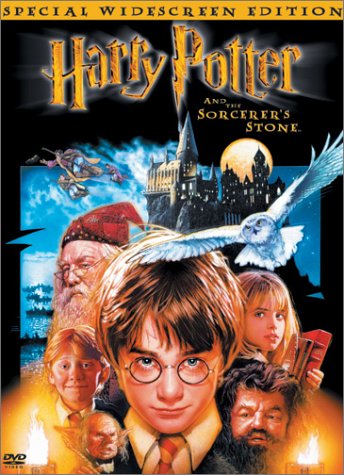
Harry Potter & the Philosopher's Stone
Returning to main story, Harry Potter, a legend, the only one to survive and somewhat related to partially destroying the Leader of the dark side ‘Lord Voldemort’ as an infant, suddenly comes to know he’s a wizard and has got admission to the best school for learning magic, HOGWARTS, headed by the redoubtable Dumbuldore. He meets people from the wizarding fraternity and instantly chooses the sides he wants to be on, is naturally talented in Quidditch the most famous game for wizards. There he meets a few friends Ron & Hermione, not to mention the gentle half giant Hagrid who also happens to be a teacher of his. Other major characters include Snape another of his teachers who happens to loathe him and Quirell another professor who acts rather strangely.
Hogwarts happens to be guarding a philosopher’s stone which gives the elixir of life, which helps a person live forever. The Dark Lord obviously wants it and that’s why it is guarded. He however latches on to quirell’s body and forces him to steal the stone….but at the last moment our saviour Harry comes to the rescue with his friends and saves the day.
An oft told story but with a few differences that the hero is not an all conquering figure but one who has to fight off his inner emotions, he does not just sacrifices his feelings for the greater good ala superman but rather fights for himself as well fights his own emotions before reaching a decision. This was a major shift in how our hero were supposed to feel & this along with the fantasy & children’s angle helped the book become as famous as it did.
Thursday, August 16, 2007
Interpreter of Maladies - Jhumpa Lahiri
Its a Collection of nine stories, most of them narrated in first person, ranging from the life in kolkata to US to UK . All 9 of them in a typical Jhumpa style which 1) leaves u with a sense of incompleteness at the end of each and 2) Makes u wonder why Jhumpa focusses so much on explaining the scene and setup so specifically and in detail like she secretly conspires to get u distracted from the main story plot . Well most of the times u wont even feel it was a complete story. Albeit , I must say some concepts of the "stories" were quite interesting and new , but i felt a bit dragged in a few portions here and there.
Although going by the title , I was sure expecting a lot of depression shots :)
The "Temporary Matter " talks about a Bengali couple , who try and get back the lost spark in their marriage using the pre-notified power failures for a week and playing a game to disclose things to each other they havent told ever. They eventually end up deciding something else altogether. The 1st half of it is depressingly slow which beats up a bit in the latter half .....
"When Mr Pirzada came home" is the flashback narration of a woman , about a phase in her life when she was a kid and when Mr Pirzada visited her parents home everyday to watch TV and have meals as he was living here in US all by himself ( without a TV ofcourse) while his wife and kids were back in the war torn Bangladesh / East Pakistan then. Its about her empathy and concern she had for Mr Pirzada as she realises that he must be too worried for his family whenever he saw the news about the war on the television.
"Interpreter of Maladies" is about a a gujju driver Mr Kapasi who is also a part time interpreter at the local doctors. He takes this young NRI couple to visit the konark temple and ends up fantasising about subtle interactions with the young , mother of three , wife. He is happy about the conversations she has with him while her husband and kids are busy getting themselves clicked enroute or getting amused by the monkeys.All the thoughts are fluoroscent till she ends up telling things to Mr Kapasi which she hadnt told anyone , which leaves Mr Kapasi a bit thinking towards the end.
"Real Durwan" is a boori maa ( guess its the bong pronounciation for a boodhi maa ) who lives under the stairs of a kolkata apartment occupied by not so affluent bengali families , about her life what was now and what she claimed it used to be. How she was the undesignated "darbaan" of the building and how she is undeservingly treated towards the end.
"Sexy" is more of a todays story ... this firang girl who falls for a married Bengali and how eventually her life zeroes down to waiting for sundays when he used to come visit her ( In his jogging attire ) to sleep with her and say " sweet things in her ears".
At "Mrs Sen's" is an encounter of this young american boy who has to spend some time at Mrs Sen's ( she was the baby sitter ) after school while his mom had still a few hours left to end the day. It highlights how imoportant it was for Mrs Sen to be able to cook a whole fish and to learn to drive a car so as to be able to go alone to anywhere she wanted and not call Mr Sen who was always so busy at the university.
"The Blessed house" - Twinkle & her husband shift to this new house where she is thrilled to discover hidden catholic symbols/idols which her husband completely hates. She infact finds it beautiful & wishes to display it in prominent places so that guests at the housewarming party could appreciate it.How her husband deals with it and how the housewarming party turns into a treasure hunt is "The Blessed house"
"The treatment of Bibi Haldar" - Bibi Haldar is a 29 old girl who is the victim of epileptic fits ( I guess thats what it was ) and how at 29 her life was far from normal. Though she lived with her Bro and Sis in law but her actual home was the store room, where "it was difficult to stand with ur head straight" . One day she realises that she wants to get married and expectedly her guardians assumed no one wud marry her. One fine day her bro abondons her and runs away after which Bibi Haldar was mostly inside the store and no one saw her much. Till one day the narrator discovers her inside in a state that eventually cures her.
"The third and final continent" was the least Ironic of them all and flows "normally" from India to London to US. In all the stories above.. u can clearly see the brilliance of Jhumpa Lahiri to narrate the minute specifics of the scene setup but "ironically" it doesent help the reader much to relate more to the stories. By and large the feel throughout was that this work of fiction is more of a hype.
Rating : **
Saturday, August 4, 2007
The Kite Runner - Khaled Hosseini
Picked up a fiction after a while this time ...A Brilliant read ... One of the most moving ones i have read.
Its about Amir and his quest to find the real himself. Its about the acts he has committed , cos he was only human .. Its about his guilt which formed inside him cos he committed these acts also that he did not commit certain other acts.
Its about Amir's Baba , a true & brave afghan to heart. About his struggle with being a single parent, about his belief in humanity and nothing else , about his subtle revolt against the existing differences between Pashtuns and Hazara communities, about his love for his country , about him not being able stand anything against Afghanistan even after he forcefully quits his country for his childs safety, About his expectations from his kid and about his secret which gives direction to this story.
Its about Hassan , A Hazara boy ... his lifelong bond with his Pashtun Master's son Amir. Its about his humility , about his brilliance in his own little way . At the end u would get a feel that maybe this is what god's own son would be like.
It of course is also about the Afghanistan that was there before the Russians trooped in and about the afghanistan as it is now..Its about the pomegranate , apple and cherry trees , its about the Rostam and Sohrab stories and about reading it to your own brother .... It ofcourse is also about flying kites and running for them , and the wish to run it over for your bro "A thousand times over"
Thats where i will restrict myself from writing more abt it , cos I wont want to be unfair to people who plan to read it up.Go pick your paper back copy ... May u be touched for a lifetime, a thousand times over.
Rating - ****